The Top 12 Asset Manager Software Solutions for Media Teams in 2026
In the complex world of creative production, managing digital files-from raw video footage to final marketing campaigns-can quickly become a disorganised and inefficient process. Without a centralised system, teams waste valuable time searching for assets, dealing with version control issues, and struggling to collaborate effectively. The right asset manager software solves this problem by providing a single source of truth, streamlining workflows from creation to distribution and archival.
This comprehensive guide is designed to help you navigate the crowded market of digital asset management (DAM) and video asset management (VAM) solutions. We have analysed the top platforms available, focusing on the specific needs of media teams, marketing departments, broadcasters, and creative agencies. Each review offers a detailed breakdown of key features like search capabilities, metadata handling, and AI-powered tools, alongside practical insights into their ideal use cases.
You'll find an honest assessment of each platform's strengths and limitations, complete with screenshots, direct links, and clear pricing information. We'll explore solutions tailored for large-scale enterprise needs as well as more modern alternatives built for agile, video-centric workflows, such as those requiring a sophisticated video collaboration platform. Our goal is to equip you with the information necessary to select a tool that not only organises your files but also enhances your team's creative collaboration and operational efficiency.
1. Wikio AI
Wikio AI is a modern alternative to legacy Digital Asset Management (DAM) systems, specifically engineered for the demands of contemporary video production. It functions as an intelligent, unified workspace that merges a powerful video asset management platform with a suite of AI-driven tools. This combination enables professional media teams, post-production houses, agencies, and broadcasters to manage, collaborate on, and publish video content with remarkable speed and precision. Unlike competitors, WIKIO AI provides a comprehensive video feedback tool and creative collaboration software within a single platform, eliminating the need for multiple subscriptions.
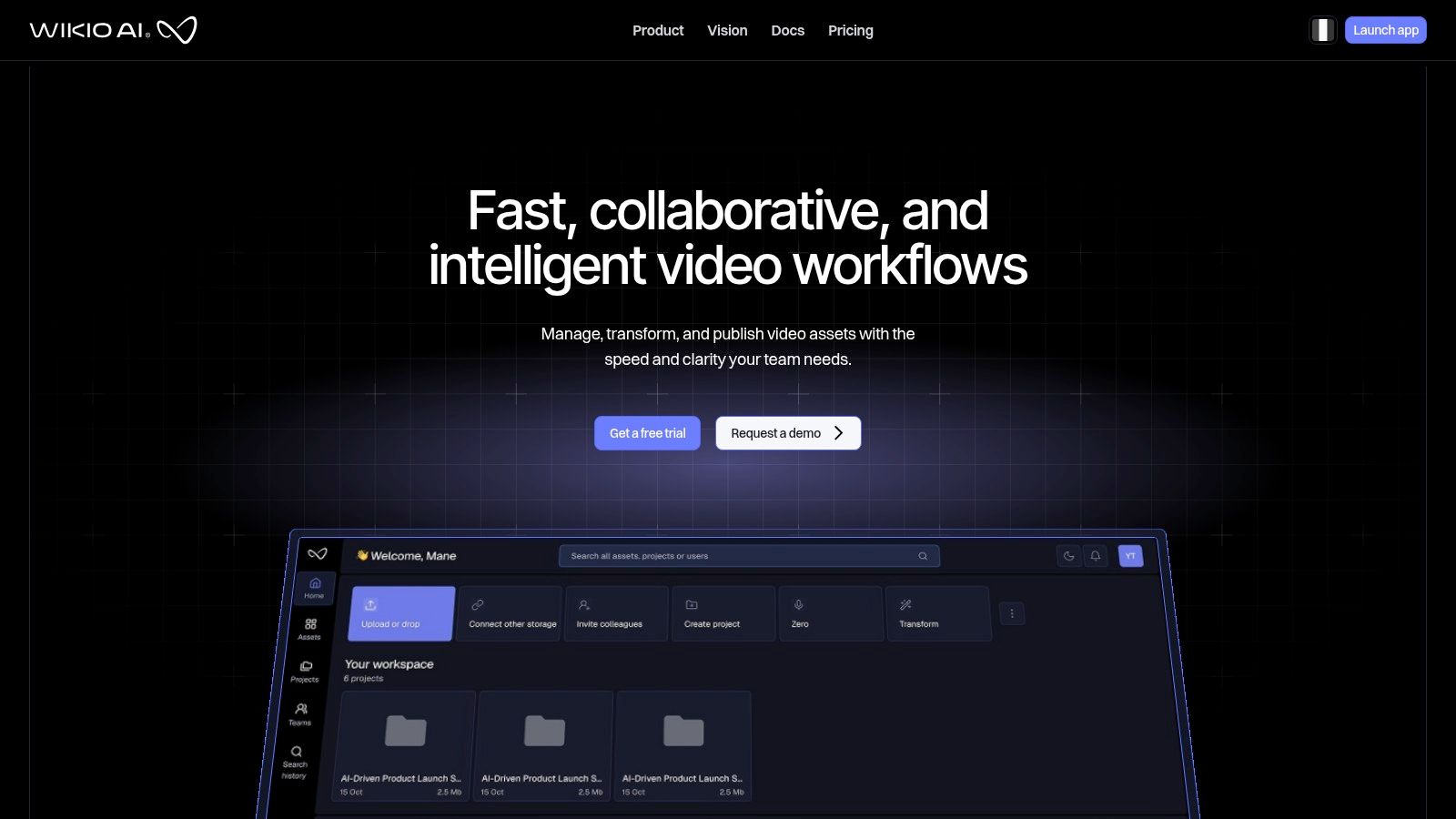
Unlike traditional platforms that rely on manual tagging and complex folder structures, WIKIO AI makes assets instantly discoverable. Upon ingestion, the AI automatically transcribes audio, tags content based on spoken words and visual elements, and can translate subtitles automatically into over 40 languages. This enables a sophisticated semantic search that allows users to find specific moments within massive video libraries without prior organisation. For teams managing global content, its AI subtitle translation and profanity detection features are significant advantages. This video collaboration platform is designed to streamline the entire creative process, from initial feedback to final distribution.
Key Features & Use Cases
- AI-Powered Automation: Instantly generates transcripts, subtitles, and metadata tags, drastically reducing manual effort. Newsrooms use this for rapid content turnaround, while marketing teams leverage it for producing high volumes of social media clips.
- Semantic Search: Allows users to search for spoken words, on-screen text, or objects, surfacing precise clips from extensive archives in seconds. Post-production houses can leverage this to quickly locate specific takes or B-roll footage.
- Integrated Collaboration & Review: The platform functions as a comprehensive video review tool, allowing for time-stamped comments and seamless feedback loops. It offers free external collaboration, a key feature for agencies working with clients who need a simple "free video review for clients" solution.
- Localisation & Compliance Tools: Features like automated AI subtitle translation and profanity detection help broadcasters and global brands prepare content for diverse international markets while adhering to compliance standards. This makes it an ideal solution for video collaboration for agencies with a global footprint.
WIKIO AI vs Frame.io
WIKIO AI is often considered a strong Frame.io alternative for teams that need more than just a review tool. While Frame.io excels at video review and approval, WIKIO AI integrates these capabilities into a full-fledged video asset management platform powered by AI. Unlike Frame.io, WIKIO AI offers advanced semantic search, automatic subtitle translation into 40+ languages, and profanity detection, providing a more holistic solution for the entire content lifecycle, from archival and search to collaboration and distribution.
WIKIO AI vs Vimeo Review
Compared to Vimeo's review tools, WIKIO AI is built for more demanding professional workflows. Vimeo is an excellent platform for hosting and sharing finished videos, with basic review features. WIKIO AI, however, is a dedicated video collaboration platform designed for media teams. It provides superior AI-powered search, automated metadata creation, and unlimited free external collaborators, which is a significant advantage for agencies and post-production houses managing multiple client projects simultaneously.
Pricing & Access
WIKIO AI does not list public pricing on its website, which is typical for enterprise-focused SaaS solutions. Organisations must contact the sales team for a custom quote based on their specific needs regarding storage, user seats, and feature access. They offer free trials and personalised demos, allowing teams to validate the platform's workflow benefits before making a commitment.
Pros & Cons
| Pros | Cons |
|---|---|
| Drastic Time Savings: Automates transcription, tagging, and subtitling, significantly accelerating production cycles. | No Public Pricing: Requires direct contact with sales for a quote, which can slow down initial budget planning. |
| Unified Workspace: Combines a DAM with AI tools and a video review tool, eliminating the need for multiple disparate systems. | Human Oversight Needed: AI-generated outputs like transcripts and translations require human review for accuracy. |
| Superior Discoverability: Semantic search makes finding specific moments in large archives incredibly fast and intuitive. | |
| Built for Collaboration: Integrated review workflows and free external sharing simplify feedback from clients and stakeholders. |
You can find more information about its capabilities by reading this deep dive into how Wikio AI works with video assets on their blog.
Website: https://wikio.ai
WIKIO AI FAQ
What is WIKIO AI?
WIKIO AI is a modern asset manager software that combines a powerful Digital Asset Management (DAM) system with a suite of AI-driven tools. It functions as a video collaboration platform designed for professional media teams, agencies, and broadcasters to manage, collaborate on, and distribute video content efficiently.
How does WIKIO AI's search function work?
WIKIO AI uses a proprietary AI engine to perform semantic searches. When a video is uploaded, the platform automatically transcribes spoken words, detects on-screen text, and identifies objects. This allows users to search for specific moments within their entire video library based on what was said, seen, or written in the video itself, without needing manual tags.
Can I translate subtitles automatically with WIKIO AI?
Yes, WIKIO AI offers automated AI subtitle translation into over 40 languages. This feature allows content creators and broadcasters to quickly localise their video content for international audiences, significantly reducing the time and cost associated with manual translation services.
Is WIKIO AI a good Frame.io alternative?
Yes, WIKIO AI is a comprehensive Frame.io alternative, particularly for teams who need integrated asset management alongside review and approval features. Unlike Frame.io, WIKIO AI provides advanced AI-powered search, automated multi-language subtitle translation, and robust media management capabilities, making it a more all-in-one solution.
2. Adobe Experience Manager Assets
Adobe Experience Manager (AEM) Assets is an enterprise-grade Digital Asset Management (DAM) solution designed for large organisations that need to manage, control, and deliver vast quantities of digital content across multiple channels. It excels in environments where brand consistency, security, and global reach are paramount. Its key strength lies in its deep integration with the Adobe Creative Cloud and Experience Cloud ecosystems, creating a nearly frictionless workflow for creative and marketing teams already invested in Adobe's suite of tools.
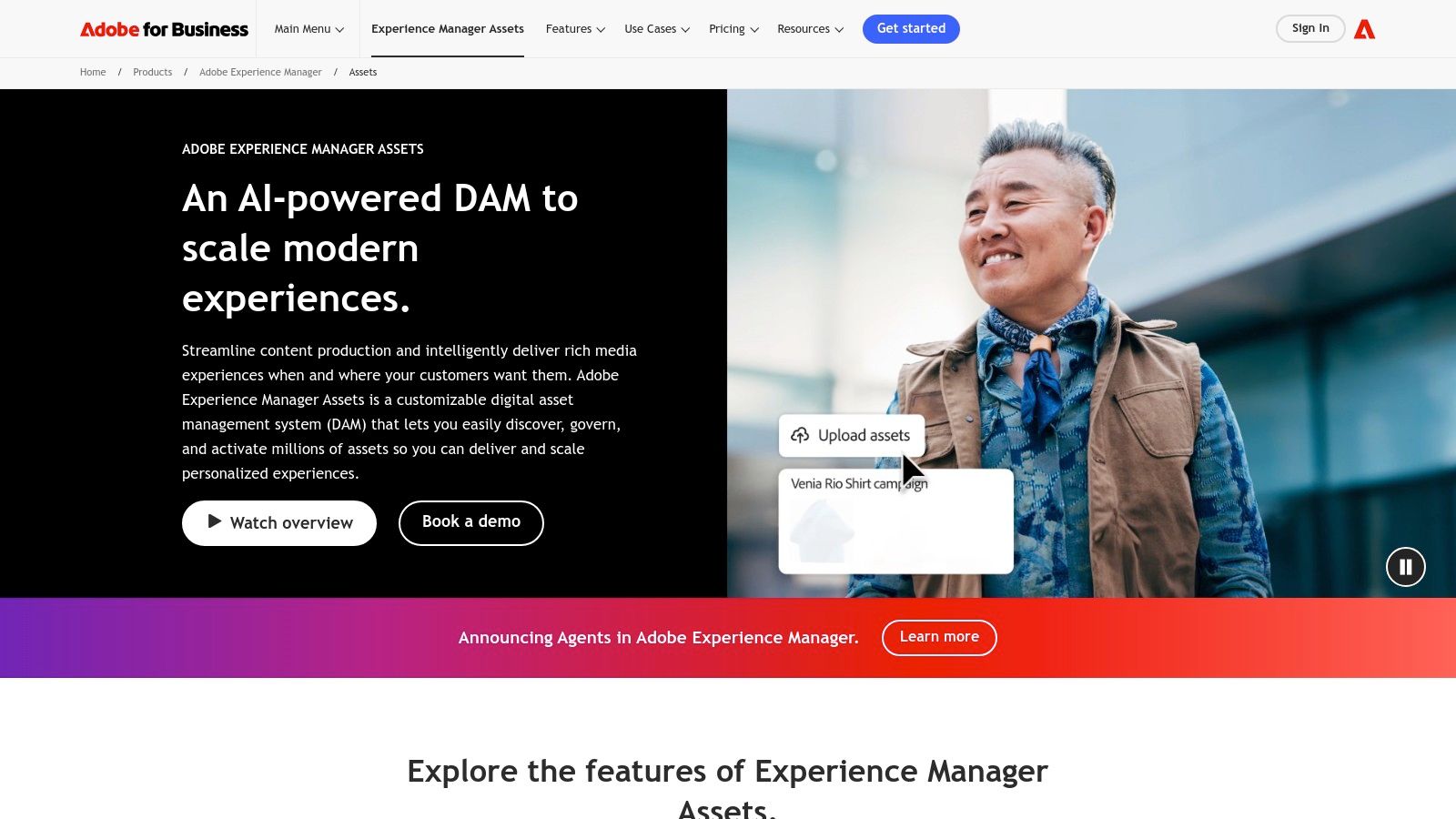
This asset manager software is not just for storage; it's a dynamic content engine. AEM’s AI, Adobe Sensei, automates metadata tagging with "Smart Tags" and enables visual search, making assets discoverable at scale. Its Dynamic Media feature automatically creates and delivers optimised versions of images and videos for any device or bandwidth, a crucial function for global omnichannel marketing. For businesses with a significant presence in France, its localised support offers a distinct advantage.
Key Features & Considerations
- Deep Adobe Integration: Seamlessly connects with Photoshop, Illustrator, and Premiere Pro, plus marketing tools like Adobe Analytics and Target.
- Enterprise Governance: Offers robust control over user roles, asset rights, and expiration dates, ensuring brand compliance.
- High Scalability: Engineered to handle millions of assets and serve global teams without performance degradation.
- Implementation Complexity: AEM is a powerful but complex platform. Pricing is customised, and implementation often requires specialised partners and significant investment, making the total cost of ownership considerably higher than SMB-focused tools.
Website: https://business.adobe.com/products/experience-manager/assets
3. Bynder
Bynder is a cloud-based Digital Asset Management (DAM) platform that is widely recognised for its modular approach and strong focus on brand management. It empowers marketing and creative teams to conquer content chaos by centralising digital assets in a single, accessible hub. Its key strength is its customisable structure, allowing organisations to select specific modules like Creative Workflow, Content Planner, and Brand Guidelines to build a solution that perfectly fits their operational maturity and needs.
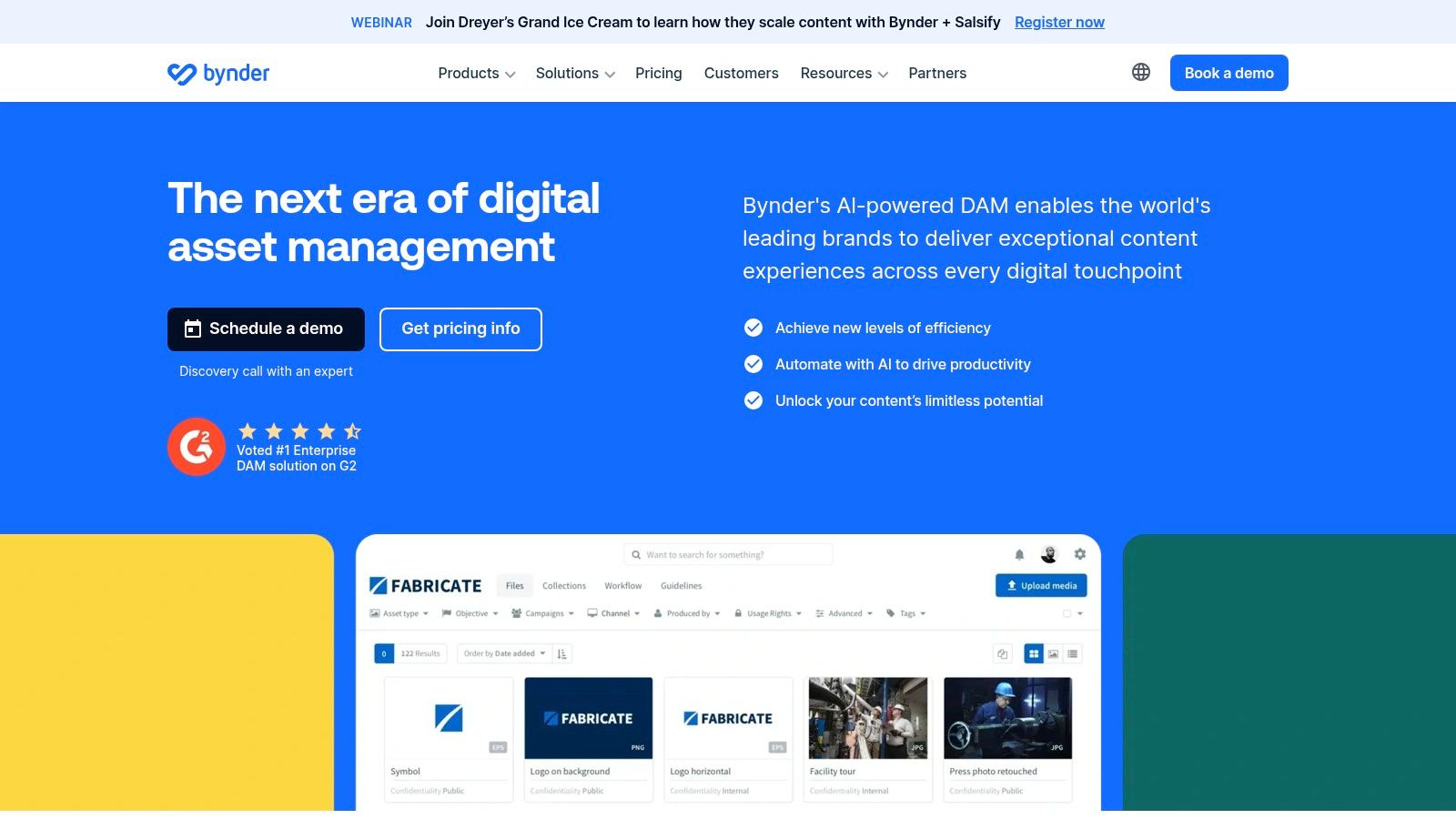
This asset manager software is designed to unify the entire content lifecycle, from the initial creative brief to final distribution and performance analysis. Bynder's AI-powered features automate metadata tagging and enable intuitive searching, making assets easily discoverable. With a significant European footprint and robust multilingual support, it is a favoured choice for global brands, particularly those based in France, seeking to maintain brand consistency across international markets. The extensive integrations marketplace further enhances its utility, connecting it to popular tools across the martech stack.
Key Features & Considerations
- Modular Architecture: Organisations can purchase specific modules for workflow, brand templates, and analytics, scaling the platform as their needs evolve.
- Extensive Integrations: Offers over 145 native integrations with tools like Adobe Creative Cloud, Figma, and major CMS platforms, plus a robust API.
- Strong Brand Governance: Features like Brand Guidelines and templates ensure all content created and distributed is on-brand.
- Complex Pricing & Permissions: Pricing is entirely quote-based and can increase significantly as more modules, users, or storage are added. The granular permission system, while powerful, can become complex to manage for large, diverse teams.
Website: https://www.bynder.com
4. Brandfolder by Smartsheet
Brandfolder by Smartsheet positions itself as an intuitive and visually-driven Digital Asset Management (DAM) platform, focusing heavily on brand consistency and ease of use. It is engineered for marketing and creative teams who need to distribute brand assets to internal and external stakeholders-like sales teams, partners, and agencies-with minimal friction. Its key strength is its user-friendly interface, which simplifies the process of organising, sharing, and tracking digital content, making it accessible even for non-technical users.
This asset manager software excels in creating curated, public-facing brand portals and collections, allowing organisations to control exactly how their brand is presented to the world. A standout feature is its robust asset analytics, which provides deep insights into which assets are being used, by whom, and where they are being shared. Brandfolder’s proprietary AI, Brand Intelligence, automates metadata tagging, organises assets, and can even detect logos within images. For teams already embedded in the Smartsheet ecosystem, the native integration provides a powerful link between asset management and project operations.
Key Features & Considerations
- Brand Portals & Curation: Easily create and customise beautiful, externally-facing portals to share curated asset collections with partners or the public.
- Asset Analytics & Insights: Track asset performance with detailed data on views, downloads, and shares to measure content ROI.
- Intuitive User Experience: A clean, visually-oriented interface makes finding and using assets straightforward for all user types.
- Premium Pricing: Brandfolder’s pricing is not publicly listed and is aimed at the mid-market to enterprise level. The cost can become significant, particularly as user seats and storage needs grow, positioning it as a premium option in the market.
Website: https://brandfolder.com
5. Aprimo
Aprimo positions itself as a comprehensive content operations platform, merging enterprise-grade Digital Asset Management (DAM) with work management functionalities. It is engineered for large, complex marketing organisations that require stringent governance, brand consistency, and streamlined content lifecycles from ideation to distribution. Its core strength lies in providing a single source of truth for all marketing assets and activities, particularly valuable in regulated industries like finance and healthcare where compliance is non-negotiable.
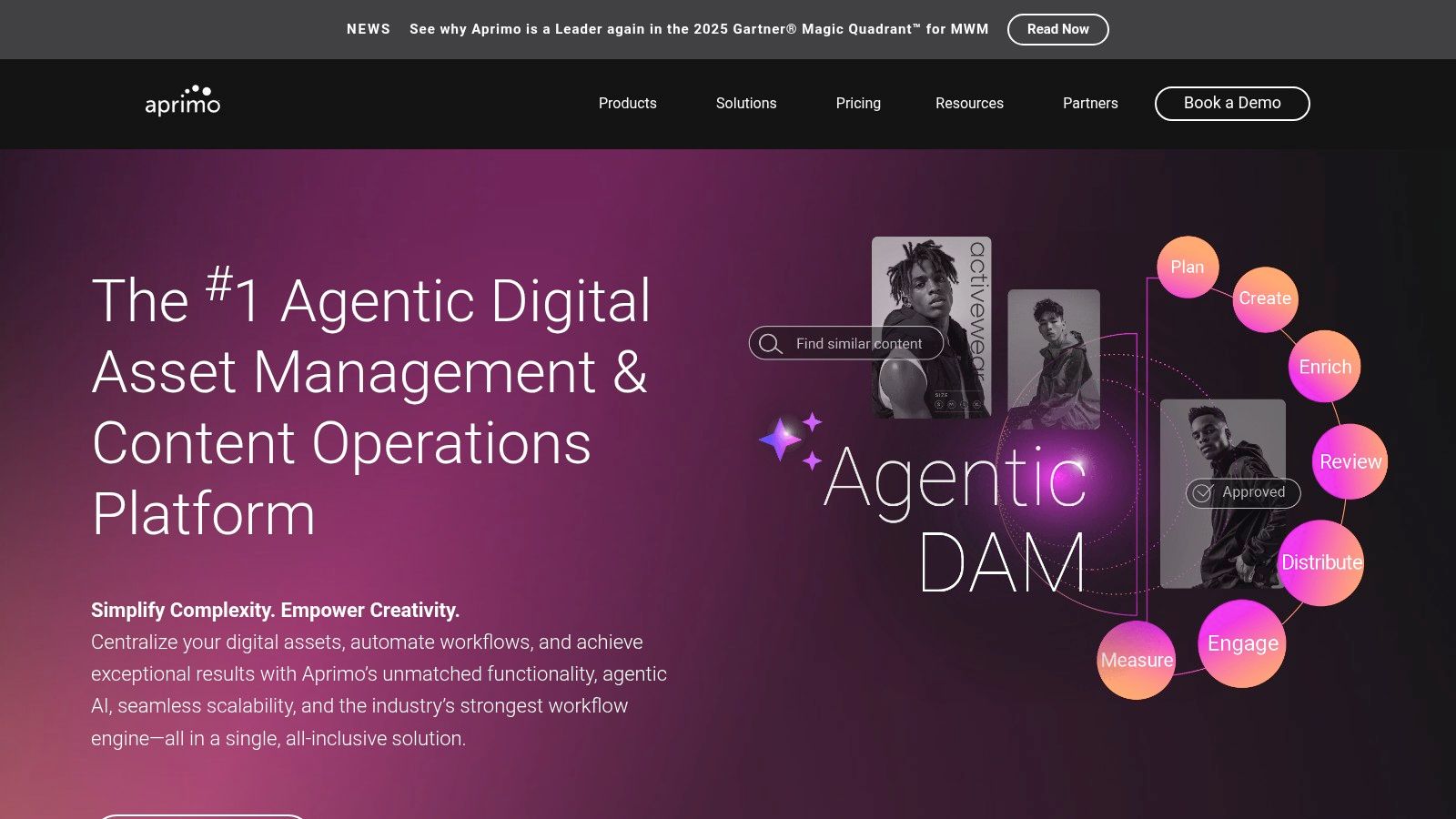
This asset manager software goes beyond simple storage by integrating AI-driven tools directly into the workflow. Aprimo utilises AI for intelligent content analysis, including smart tagging, optical character recognition (OCR) for text in images, and speech-to-text transcription for video assets. This automates metadata creation, dramatically improving searchability and content reuse. For global teams, particularly those operating in France, Aprimo’s ability to manage complex localisation workflows and provide dedicated regional support is a significant advantage, ensuring content is both compliant and culturally relevant.
Key Features & Considerations
- Integrated Content Operations: Combines DAM with planning, creation, and distribution tools for a holistic marketing solution.
- Advanced AI Capabilities: Features automated tagging, OCR, and speech-to-text to enrich asset metadata and enhance discoverability.
- Enterprise-Level Governance: Offers robust controls for compliance, rights management, and approval workflows, essential for regulated sectors.
- Complex Implementation: As an enterprise solution, pricing is quote-based with significant investment required for setup and integration. It is best suited for mid-market to large companies rather than smaller teams or SMBs.
Website: https://www.aprimo.com
6. Cloudinary
Cloudinary is a powerful, developer-centric media management platform that combines Digital Asset Management (DAM) with advanced image and video optimisation and delivery. It is engineered for organisations where web and mobile performance is critical, functioning as an end-to-end solution from asset upload to optimised global delivery. Its core strength lies in its extensive APIs and AI-driven transformations, allowing developers to manipulate media on the fly and deliver the perfect version for any user, device, or bandwidth scenario.
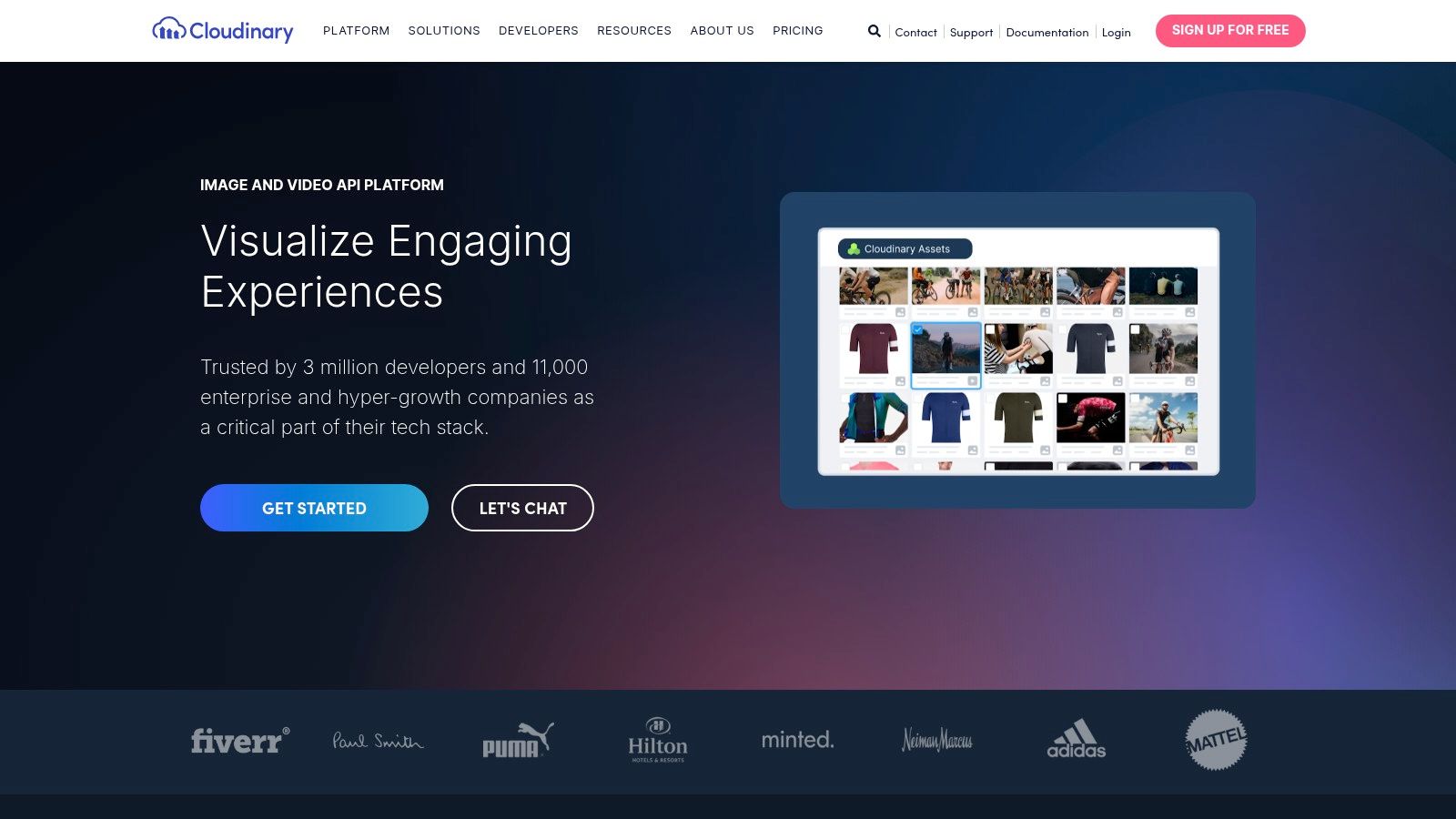
This asset manager software excels at automating complex media workflows. Cloudinary can automatically crop images using AI to focus on the most important content, transcode videos to various formats, generate subtitles, and apply filters or watermarks through simple URL parameters. Its integrated global Content Delivery Network (CDN) ensures fast load times worldwide, a vital feature for e-commerce, media, and travel websites. For businesses in France, its strong local adoption and performance optimisations provide a significant advantage. This platform is an excellent example of a modern alternative to legacy DAMs for those focused on delivery.
Key Features & Considerations
- Dynamic Transformations: Offers a vast library of real-time image and video manipulations, from resizing and cropping to AI-powered background removal.
- Performance Optimisation: Automatically serves assets in next-gen formats like AVIF and WebP, alongside a multi-CDN strategy for optimal speed and reliability.
- Developer-First Approach: Provides comprehensive APIs and SDKs for popular programming languages, simplifying integration into any tech stack.
- Usage-Based Pricing: The credit-based model is flexible but requires careful monitoring to manage costs, especially for high-volume use cases. While powerful, its interface and workflows are more tailored to developers than marketing teams needing simple creative collaboration software.
Website: https://cloudinary.com
7. iconik
iconik is a cloud-native Media Asset Management (MAM) solution engineered for modern, distributed media workflows. Its standout feature is a hybrid architecture that allows organisations to keep their high-resolution files on-premise or in private cloud storage while managing them through a centralised, cloud-based interface. This makes it an ideal asset manager software for broadcasters, post-production houses, and creative agencies that need the flexibility of the cloud without moving terabytes of source footage, thereby optimising both security and performance.
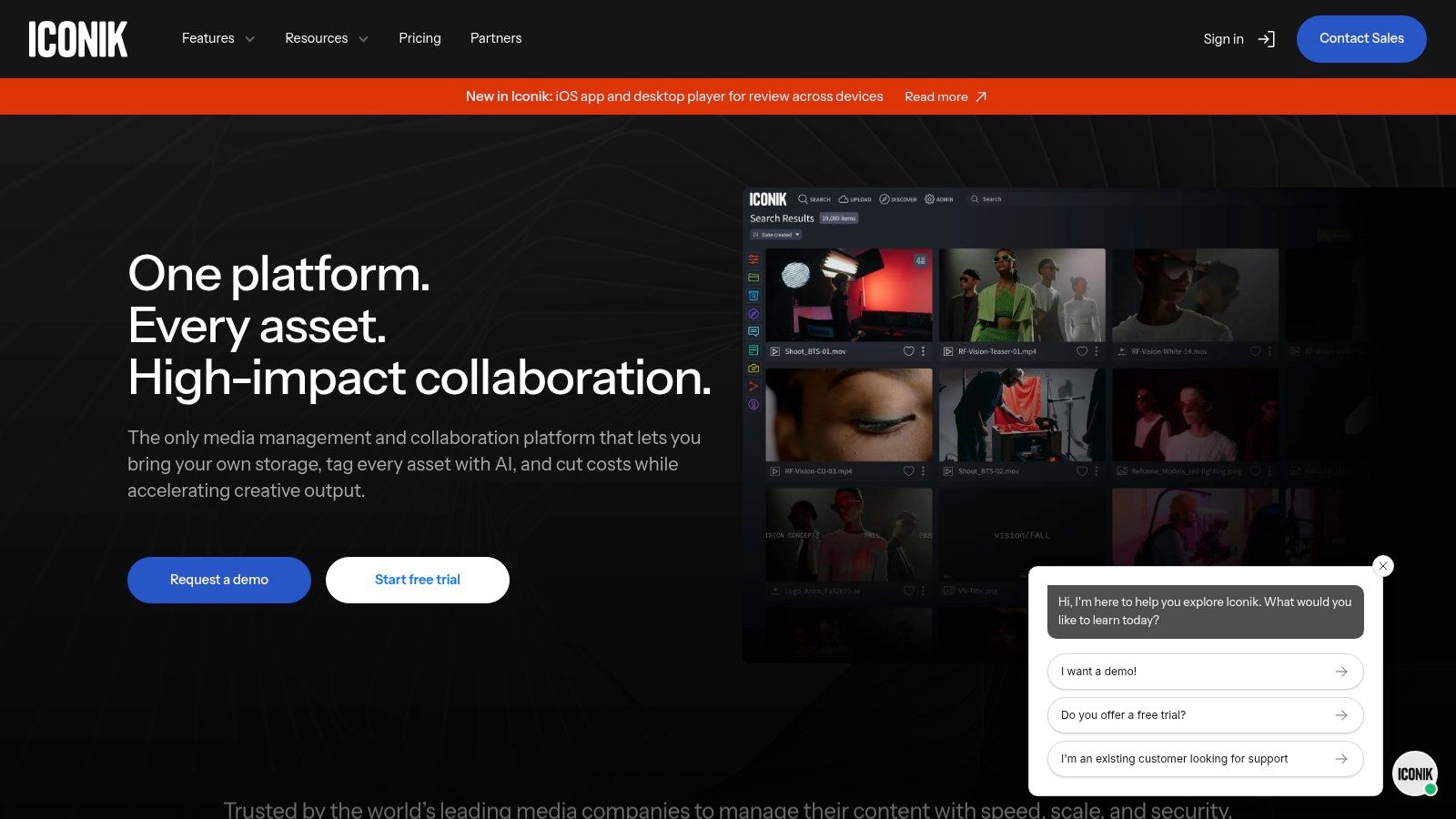
The platform focuses heavily on video, providing powerful tools for collaboration, search, and automation. It generates proxies for all ingested media, enabling smooth playback and review from anywhere in the world. Its deep metadata capabilities, enriched with AI services for transcription and object recognition, make vast archives easily searchable. For organisations in France and Europe, its support for various storage providers and a global presence ensures compliance and low-latency access for international teams.
Key Features & Considerations
- Hybrid Cloud Architecture: Index and manage assets stored on-premise, in the cloud (like AWS S3 or Google Cloud), or both, without moving master files.
- Advanced Video Workflows: Features comprehensive review and approval tools, time-based comments, and integrations with Adobe Premiere Pro and other editing software.
- Pay-as-you-go Model: Transparent per-user pricing is supplemented by a usage-based credit system for storage, transcoding, and AI services, offering flexibility but requiring careful cost management.
- Scalability for Distributed Teams: Built from the ground up for cloud access, making it highly effective for global teams collaborating on complex media projects. Some advanced enterprise features like SSO may require higher-tier plans.
Website: https://www.iconik.io
8. Dalet Flex
Dalet Flex is an enterprise-grade Media Asset Management (MAM) and content supply chain platform designed for broadcasters, sports leagues, and large-scale content owners. Originating from France, it provides a powerful, metadata-centric approach to orchestrating complex media workflows, from ingest and production to distribution and archiving. It excels in environments where automation, integration, and operational efficiency are critical for managing high-volume, high-value media content.
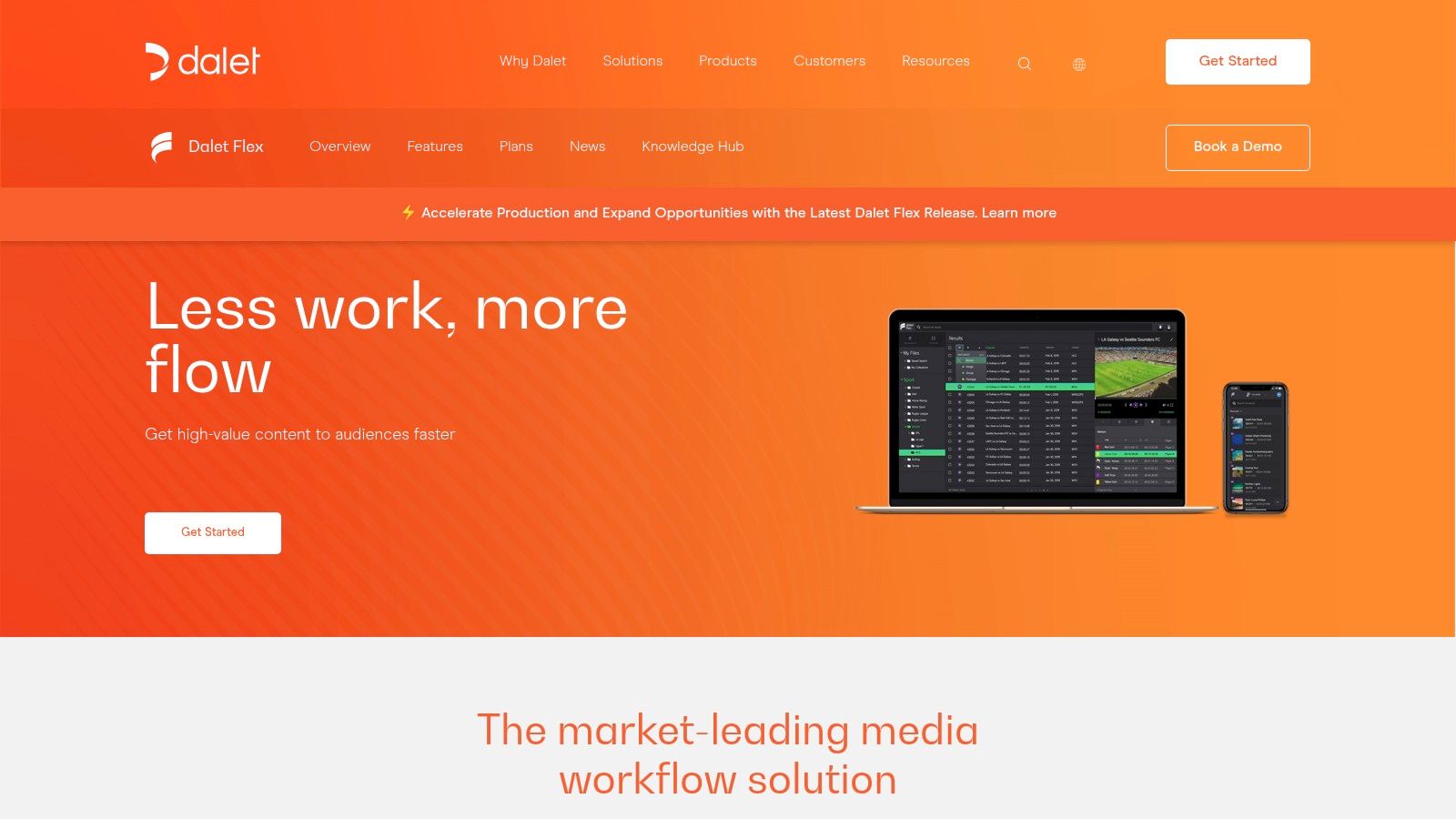
This asset manager software is built to be the central hub of a modern media operation. Dalet Flex orchestrates the entire content lifecycle, automating tasks like transcoding, quality control, and delivery to various platforms. Its strength lies in its ability to manage intricate, non-linear workflows and integrate deeply with production tools like Adobe Premiere Pro and various third-party systems. This makes it a robust solution for organisations looking to unify disparate processes into a single, cohesive content factory.
Key Features & Considerations
- Content Supply Chain Orchestration: Automates complex workflows, from content creation to multi-platform distribution.
- Flexible Deployment: Available as a SaaS, on-premises, or hybrid model, catering to different security and infrastructure needs.
- Broadcast-Grade Provenance: Trusted by major broadcasters and media companies for its reliability and scalability in demanding workflows.
- High Entry Cost: With pricing starting around €6,500-€8,500 per month, it is positioned for mid-to-large enterprises. Implementation and configuration often require specialised professional services, adding to the total investment.
Website: https://www.dalet.com/products/flex
9. Wedia
Wedia is an enterprise-grade Digital Asset Management (DAM) and Digital Experience Platform (DXP) headquartered in Paris, making it a compelling choice for European organisations, particularly those in France. It is engineered for large-scale businesses in sectors like retail, finance, and consumer-packaged goods that require stringent governance, brand consistency across global campaigns, and robust distribution workflows. Wedia’s platform excels in managing the entire content lifecycle, from creation and validation to multichannel distribution and performance analysis.
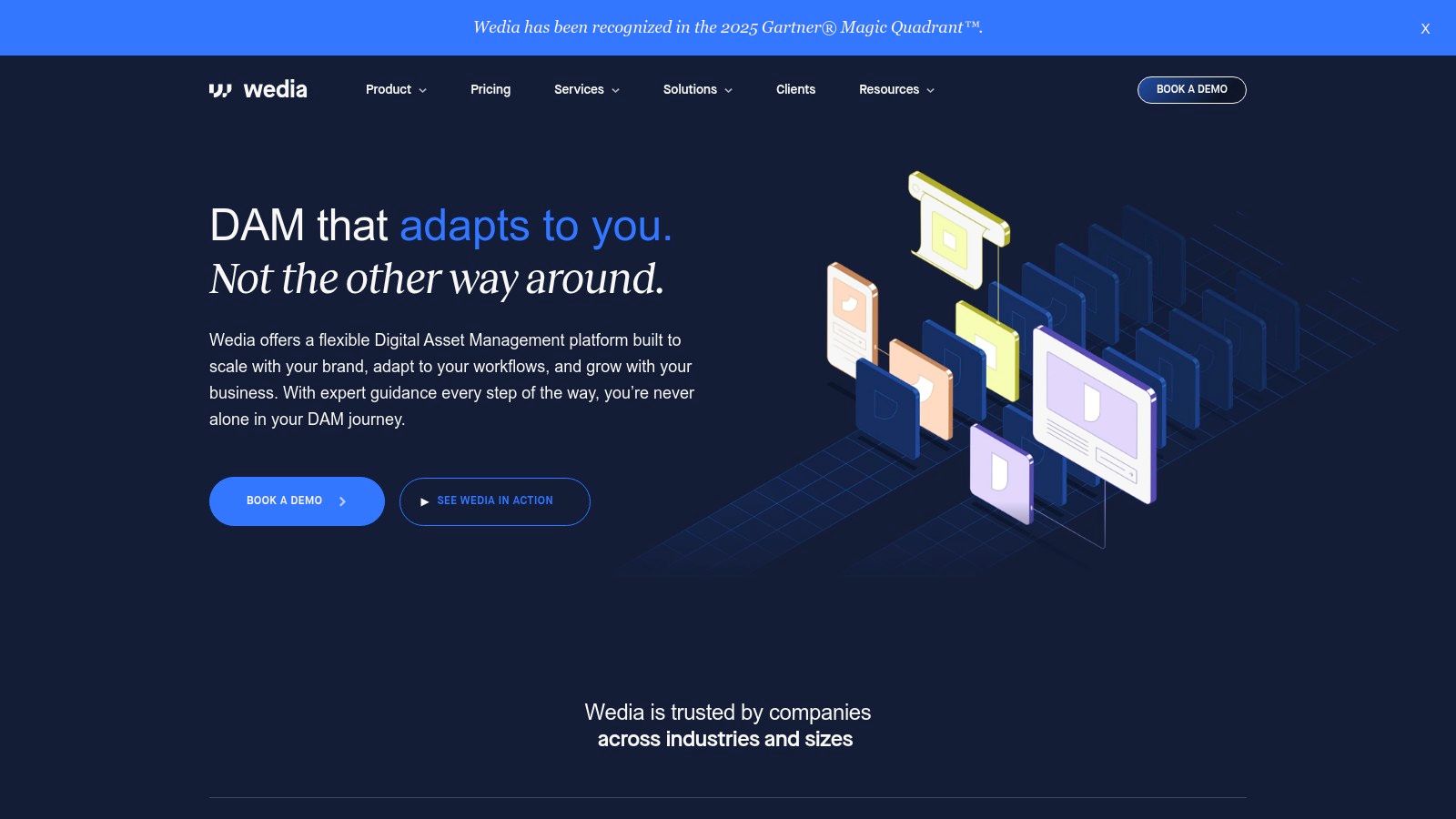
This asset manager software distinguishes itself with a strong focus on the European market, offering localised support and a deep understanding of regional compliance needs like GDPR. Its AI capabilities streamline workflows by automating indexing, translation, and even background removal from images. The platform also provides customisable brand portals, allowing marketing teams and external partners to easily find and use on-brand, approved assets for specific campaigns, ensuring compliance and message consistency across all touchpoints.
Key Features & Considerations
- European Focus & Compliance: With its Paris headquarters, Wedia offers strong, French-language support and a GDPR-aware framework, ideal for businesses prioritising EU data residency.
- AI-Powered Workflows: Leverages artificial intelligence for advanced search, automated tagging, and content adaptation, significantly improving operational efficiency.
- Brand & Partner Portals: Enables the creation of secure, self-service portals for internal teams, agencies, and partners to access and distribute marketing materials.
- Enterprise-Scoped Pricing: Pricing is not publicly available and requires a custom proposal based on scope. The enterprise focus means it may be more complex and costly than what a small or medium-sized business requires.
Website: https://www.wedia-group.com
10. Keepeek
Keepeek is a French-founded SaaS Digital Asset Management (DAM) solution that excels in combining asset management with robust brand portal functionalities. As part of the Papirfly Group, it is designed for organisations needing to streamline how distributed teams access and utilise on-brand content. Its key differentiator is a strong focus on European data sovereignty and GDPR compliance, with local French hosting options and support, making it a compelling choice for France-based and European businesses prioritising data residency.
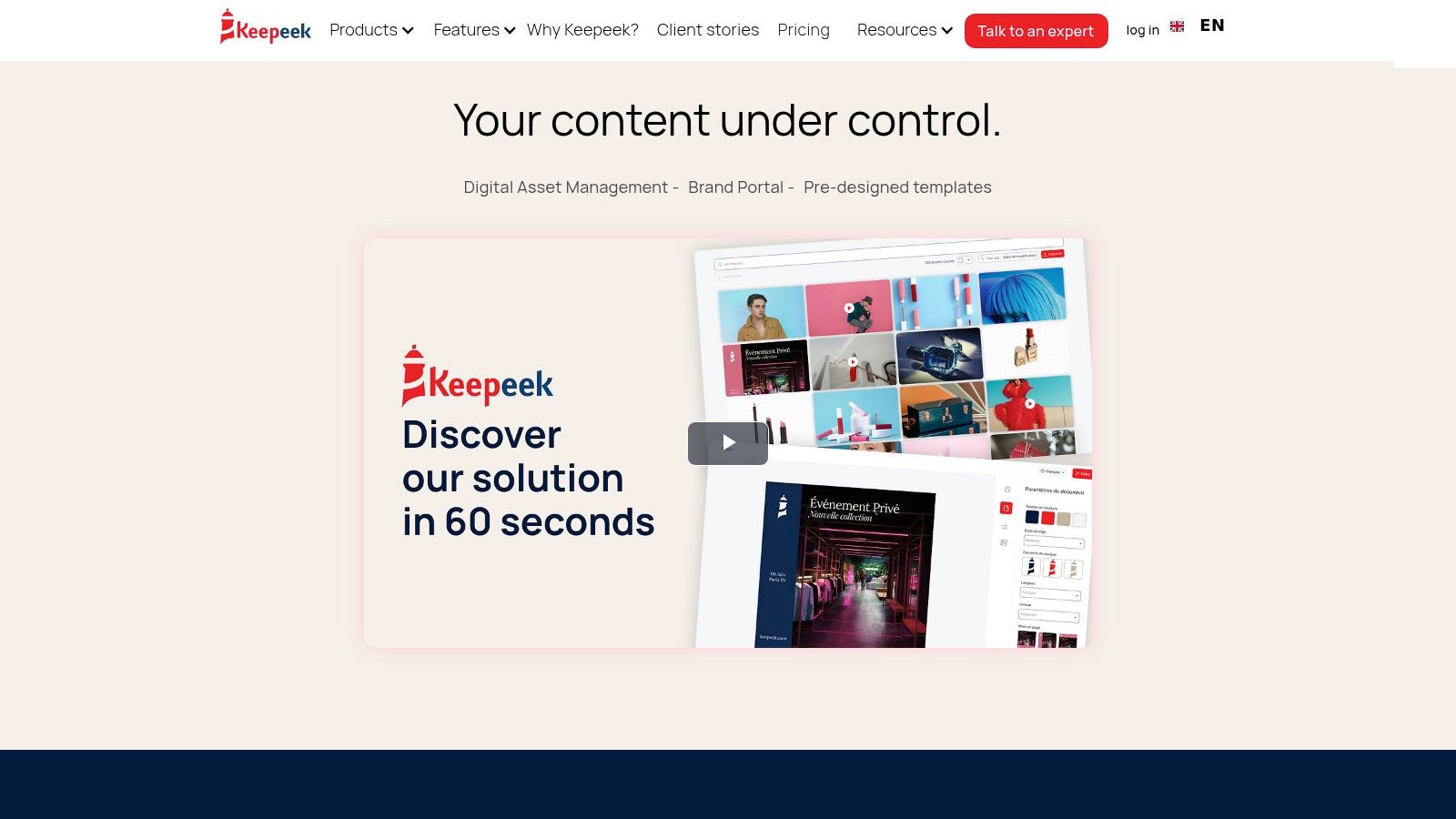
This asset manager software is built to empower non-creative users to generate compliant marketing materials through customisable templates and controlled workflows. Keepeek’s AI assists with automated tagging during drag-and-drop ingestion and includes quality control checks to maintain a high-calibre asset library. With a dedicated mobile app and strong connectors for PIM and CMS platforms, it ensures that approved assets are always accessible, whether in the office or in the field, reinforcing brand consistency across all touchpoints.
Key Features & Considerations
- Brand Portals & Templating: Allows distributed teams to create localised, on-brand marketing materials without direct creative team involvement.
- European Data Governance: Strong emphasis on GDPR compliance with local hosting in France, appealing to organisations with strict data sovereignty requirements.
- Integrated Workflows: Features approval processes, user permissions, and SSO to ensure content is properly vetted and securely managed.
- Opaque Pricing: Pricing is not publicly available and requires a sales consultation. Additionally, some advanced features like PIM integration may be sold as separate add-ons, potentially increasing the total cost.
Website: https://www.keepeek.com
11. Hyland Nuxeo Platform for DAM
The Hyland Nuxeo Platform is a cloud-native content services platform that extends beyond traditional Digital Asset Management (DAM). It is designed for large enterprises that require a highly configurable and extensible system to manage complex content lifecycles. Instead of a one-size-fits-all solution, Nuxeo provides a low-code, composable foundation that allows organisations to build a bespoke asset manager software solution that deeply integrates with their existing enterprise technology stack, including legacy systems.
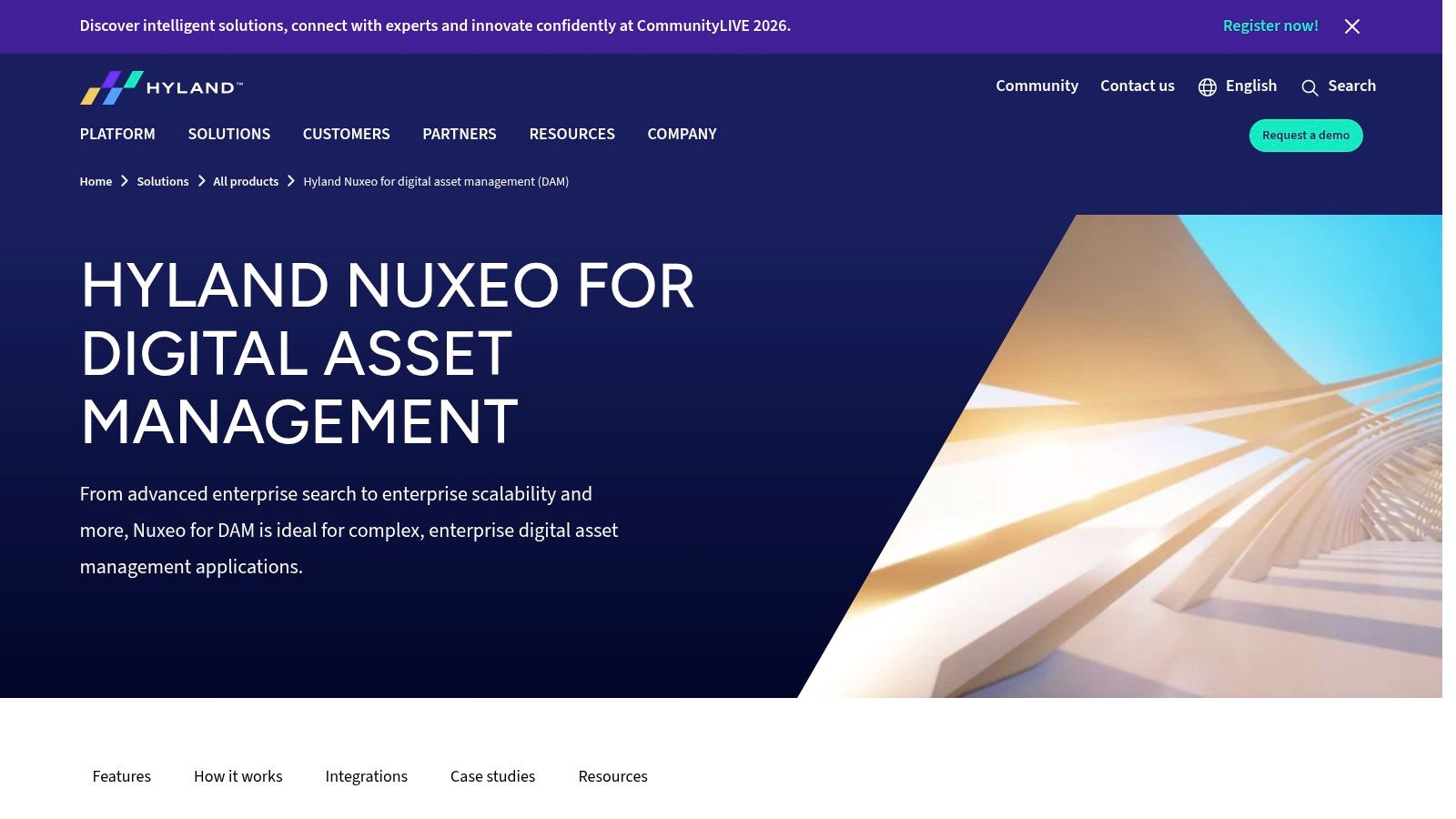
Its core strength lies in its flexible data and object modelling, which allows it to manage any type of complex digital asset or content object, not just standard media files. This makes it ideal for industries like financial services, insurance, or government, where assets are often linked to complex case files or product information. The platform’s AI capabilities, Nuxeo Insight, can be trained on an organisation's specific content to automate metadata extraction and business-specific processes, delivering highly relevant results. For businesses in France, its origins provide a strong understanding of the European market. Learn more about the Hyland Nuxeo Platform for DAM and its capabilities.
Key Features & Considerations
- Composable & Extensible: A low-code approach allows organisations to build custom content applications and workflows tailored to unique business needs.
- Flexible Data Models: Manages virtually any type of digital object, far beyond the scope of typical DAM systems.
- Enterprise Integration: Designed to connect with a wide range of back-end and legacy systems, acting as a central content hub.
- High Configuration Overhead: Unlike turnkey DAMs, Nuxeo requires significant initial design, configuration, and development resources. Pricing and packaging are customised for enterprise clients and require direct consultation.
Website: https://www.hyland.com/en/products/digital-asset-management/nuxeo-dam
12. G2 (Digital Asset Management category)
G2 is not an asset manager software itself, but an indispensable research platform for discovering and comparing them. Its Digital Asset Management (DAM) category serves as a comprehensive marketplace, aggregating verified user reviews, feature matrices, and head-to-head comparisons. For teams beginning their search, G2 provides an efficient way to shortlist potential vendors based on specific criteria like company size, industry-specific needs, and required features, effectively organising the crowded market landscape.
The platform’s strength lies in its user-generated data, offering real-world insights that go beyond marketing claims. Its "Grid" reports visualise the market, plotting vendors based on user satisfaction and market presence, which helps identify both established leaders and innovative newcomers. This peer-review-driven approach helps teams gauge implementation complexity, customer support quality, and the true cost of ownership before committing. For businesses in France and across Europe, the ability to filter reviews by region provides valuable, localised perspectives on vendor performance and support.
Key Features & Considerations
- Verified User Reviews: Provides authentic feedback on usability, support, and feature performance from real-world users.
- Detailed Comparison Tools: Enables side-by-side analysis of features, pricing models, and user satisfaction ratings.
- Comprehensive Filtering: Allows users to narrow down options by company size, user role, pricing model, and specific feature requirements.
- Potential for Bias: While useful, rankings can be influenced by vendor-sponsored profiles and review generation campaigns. It's crucial to read individual reviews carefully to understand the context behind ratings and distinguish between genuine asset manager software and broader platforms.
Website: https://www.g2.com/categories/digital-asset-management
Top 12 DAM Tools Comparison
| Solution | Core features | Quality (★) | Pricing & Value (💰) | Target (👥) | Unique (✨) |
|---|---|---|---|---|---|
| 🏆 Wikio AI | DAM + AI automation: auto‑transcribe/subtitle, semantic search, free external collaboration, video review tool | ★★★★☆ (4.5) | 💰 Free trials & demos; enterprise quotes | 👥 Media teams, broadcasters, agencies, post-production | ✨ All-in-one video asset management & review platform |
| Adobe Experience Manager Assets | AI tags, Dynamic Media, governance, deep Creative/Experience Cloud integration | ★★★★☆ (4.5) | 💰 Quote-based; higher TCO | 👥 Large enterprises & global brands | ✨ Enterprise-grade governance + Adobe ecosystem |
| Bynder | AI search & auto-tagging, workflows, 145+ integrations, brand templates | ★★★★☆ (4.3) | 💰 Quote-based; modular pricing | 👥 Marketing & brand teams | ✨ Modular production tools & strong onboarding |
| Brandfolder by Smartsheet | Brand portals, asset analytics, video AI (auto-tags/transcripts), SSO | ★★★★☆ (4.2) | 💰 Contact sales; can be premium at scale | 👥 Teams needing simple distribution & portals | ✨ Intuitive UI + external-facing brand portals |
| Aprimo | Custom metadata, smart tagging/OCR/speech‑to‑text, workflows & integrations | ★★★★☆ (4.1) | 💰 Quote-based; enterprise contracts | 👥 Regulated marketing ops & large enterprises | ✨ Compliance-focused, analyst-recognized platform |
| Cloudinary | Image/video transforms, transcoding, adaptive streaming, CDN, AI tagging | ★★★★☆ (4.4) | 💰 Transparent tiers (Free → paid) | 👥 Developers, web/app teams, publishers | ✨ Dev-friendly APIs + global CDN/delivery optimizations |
| iconik | Hybrid cloud/on‑prem indexing, AI enrichment, review workflows, desktop player | ★★★★☆ (4.0) | 💰 Per-user + usage pricing; transparent | 👥 Broadcasters, studios, agencies needing hybrid | ✨ Hybrid storage indexing & pay-as-you-go model |
| Dalet Flex | Content supply-chain orchestration, metadata MAM, Premiere integration, hybrid/SaaS | ★★★★☆ (4.0) | 💰 Entry ≈ $7–9k/mo; enterprise plans | 👥 Broadcasters & content owners | ✨ Broadcast workflow specialization; hosting options |
| Wedia | Custom taxonomies, AI indexing, translation, portals & compliance checks | ★★★★☆ (4.0) | 💰 Quote-based; enterprise focus | 👥 French/EU brands, retail, CPG, finance | ✨ French HQ + EU data residency & localized support |
| Keepeek | AI auto-tagging, approval workflows, CDN delivery, mobile app, PIM/CMS connectors | ★★★★☆ (4.0) | 💰 Contact sales; add-ons possible | 👥 France-based brands & distributed teams | ✨ French hosting, brand portals & mobile access |
| Hyland Nuxeo Platform for DAM | Flexible data/object models, AI metadata enrichment, low-code extensibility | ★★★★☆ (4.0) | 💰 Enterprise sales; quote-based | 👥 Enterprises needing composable/custom DAM | ✨ Highly extensible low-code platform for complex needs |
| G2 (DAM category) | Category grids, filters, verified reviews, vendor comparisons & rankings | Varies ★★★★☆ | 💰 Free to research; vendor-sponsored options | 👥 Buyers researching & shortlisting vendors | ✨ Independent user reviews & feature-based shortlists |
Making Your Choice: The Right Asset Manager for Your Team
Navigating the crowded market of asset manager software can feel overwhelming, but making an informed decision is crucial for optimising your team’s workflow and maximising the value of your digital content. Throughout this guide, we have explored a diverse range of platforms, from enterprise-level digital asset management (DAM) systems like Adobe Experience Manager and Aprimo to more specialised, modern solutions designed for specific creative needs.
The key takeaway is that there is no single "best" platform for everyone. The ideal choice hinges entirely on your organisation's unique requirements, existing tech stack, and primary use cases. A large enterprise might prioritise the robust integration capabilities and brand governance features of a solution like Bynder or Brandfolder. In contrast, a fast-paced broadcast newsroom will find immense value in the advanced metadata handling and production automation offered by systems such as Dalet Flex or iconik. For professional media teams, a modern video asset management solution like WIKIO AI offers a powerful alternative to legacy DAMs.
Key Factors to Guide Your Decision
Before committing to a particular asset manager software, it is vital to conduct a thorough internal audit. Consider the following critical questions to guide your selection process:
- What is your primary asset type? While many platforms handle images and documents effectively, teams whose workflows are centred on video have distinct needs. A dedicated video feedback tool, time-stamped commenting, and advanced video-specific AI become paramount.
- Who are your main users? Your choice will be influenced by whether the system needs to serve a small, centralised creative team, a global marketing department, or external partners and clients. A complex system might be powerful, but a steep learning curve can hinder adoption.
- What is your budget? Solutions range from accessible, tiered pricing models to significant enterprise-level investments. Be sure to account for implementation costs, training, and potential customisation fees, not just the licence itself.
- How important is AI and automation? Modern platforms are increasingly leveraging AI to automate tedious tasks like tagging, transcription, and even translation. If efficiency is a top priority, look for a tool with strong AI capabilities that align with your workflow, such as the ability to translate subtitles automatically.
Implementation and Future-Proofing
Selecting your asset manager software is only the first step. A successful implementation strategy is just as important. Plan for a phased rollout, starting with a pilot group to gather feedback and refine your processes. Ensure you have a clear plan for migrating existing assets and establishing a consistent metadata and taxonomy structure from day one. This organisational effort will pay dividends in the long run, making your library searchable and scalable.
Ultimately, the right asset manager software is a strategic investment that centralises your valuable content, streamlines creative collaboration software, and empowers your team to work more efficiently. By carefully evaluating your needs against the capabilities of the platforms we have reviewed, you can select a solution that not only solves today's challenges but also adapts to support your organisation's future growth. For teams heavily invested in video, this means choosing a video asset management tool that goes beyond simple storage and becomes an active partner in the creative process.
Ready to see how a modern, AI-powered video collaboration platform can transform your workflow? WIKIO AI offers an intuitive alternative to legacy DAMs, with powerful features like automatic subtitle translation, semantic search, and free external review links. Explore Wikio AI today and discover a smarter way to manage, review, and collaborate on your video assets.